November 5, 2026
Just How Fence Installers Achieve Consistent Panel Spacing
By @codyfence-installerhifj941
Consistent panel spacing is one of those information that most individuals do not notice until it is wrong. A fence can be made from straight hardwood, easily reduced metal, and appropriate messages, yet still look uncomfortable if the gaps wander from one panel to the next. When you stand back and overlook a run, your eye reads balance and rhythm. Good Fence installers recognize that the spacing is the rhythm.
In my experience setting up and coordinating fence jobs throughout rural yards and busier sites, constant spacing comes down to a https://lnkd.in/p/gbJ5ETTb few repeatable routines. The twist is that those routines still rely upon judgment, because nothing is ever before perfectly consistent, especially not the ground and not the existing boundaries.
If you have actually ever before enjoyed a Fence company group deal with a string line, a pile of spacers, and a calm "gauge twice, readjust as soon as" strategy, you have actually seen the core method. Allow's unbox how it's done, why it functions, and what Fence contractors do when real-world issues show up.
The genuine reason spacing looks consistent: control points
Most fence job fails visually for an easy reason, installers lose control of the spacing reference. That could appear abstract, yet in technique it is really physical. You require a dependable starting factor, and you require a repeatable method to maintain every panel aligned to that starting factor as you relocate along the fencing line.
Fence installer Melbourne crews often work within limited side setbacks, around developed yards, and together with driveways where the line needs to begin in exactly the appropriate place. The spacing could only be, state, 20 to 40 millimetres between pickets or 2 to 5 millimetres in between slats in a Colorbond design system. Those are small numbers, but if you get back at a 5 millimetre drift throughout a future, the fence starts to look "bumpy" as opposed to straight.
The method is that the spacing is not measured panel by panel alone. It is handled from control factors: a properly significant line, precise message positions, and a regular method for setting the initial panel so the remainder follow.
Start with the line, not the blog posts (yes, really)
It is tempting to believe articles define whatever, and they do, yet the line specifies article placement and spacing consistency.
A typical specialist approach begins by establishing the fencing line with string or laser recommendation from a known limit reference. After that the team verifies the line at periods, particularly where the fence changes direction or where it meets an entrance opening.
When I have seen Fencing contractors do spacing less reliably, it is usually due to the fact that the line was treated like a "basic guide." A slightly off line at the beginning comes to be much more obvious the further you go. That impact is magnified if you are dealing with pre-made panels, where the installer can not "flex" each run without it looking wrong.
Good Fence company Melbourne groups will usually:
- Set the line firmly, and maintain it under tension so it does not sag.
- Check the line at least when mid-run, not just at the start and finish.
- Confirm the line when they hit barriers like tree origins, service trenches, or driveway edges.
A little improvement very early is simpler than attempting to remedy later spacing drift with impromptu adjustments.
Post spacing and panel spacing are linked
People commonly say "panel spacing" when they really suggest "picket-to-picket" spacing, or "gap between rails and slats." But in most systems, panel spacing is locked to publish spacing and rail geometry.
If the posts are unequal, the rails can turn or rest at somewhat different heights. Then even if the spaces between boards are established with spacers, the spacing will not look consistent due to the fact that the boards are no more encountering the very same plane.
This is where expert Fence contractors do something that can look like slow job: they deal with post spacing as part of the spacing end result, not a separate task.
In useful terms, it suggests:
- Measuring blog post centres carefully.
- Accounting for the exact method the panel or rail system places to the post.
- Checking that the rails stay straight as they travel from article to post.
Even a light rail bow can cause the fence to "open up" on one side of a run and tighten on the other.
The spacer technique: easy, but just if made use of consistently
The most typical device for consistent spacing is a spacer. It may be a committed plastic spacer made for a particular system, a hardwood offcut of known size, or a readily made "jig" that rests in between boards while you fasten.
Spacers do two jobs at once.
First, they established the gap. Second, they act as a repeatable reference point so the installer does not need to eyeball the range each time.
The catch is that spacers only work if the installer utilizes them similarly every single time. That indicates positioning the spacer continually relative to the board face, holding the board level, and attaching without pushing the board off position.
I have seen spacing problems take place also when the installer had the appropriate spacer. It generally comes down to fasteners. If you drive screws while the board is under small tension, the board can change a millimetre or 2. That seems small, however across a sequence it comes to be really noticeable.
The pro step is to place, examine alignment, attach in a regulated order, and maintain the spacer positioning uniform.
Rail straightness is the unnoticeable spacing secret
For picket secure fencing and numerous panel systems, the spacing you see at the top is only just as good as what is happening below. If the rails are uneven or are not set up directly, the boards can rest with a small twist.
In hardwood fencings, that spin can originate from small variants in rail straightness or from ground disproportion. In steel fencings, it can originate from rail positioning and brace placement.
Fence installer Melbourne groups typically make use of a combination of level, string lines, and eye-level checks. They additionally pay attention to the order of procedures. For instance, if you deal with all the boards as rapid as possible without very first confirming that the rails are directly, you might end up with the boards "combating" the structure. Once boards are screwed in, fixing spacing ends up being expensive and slow.
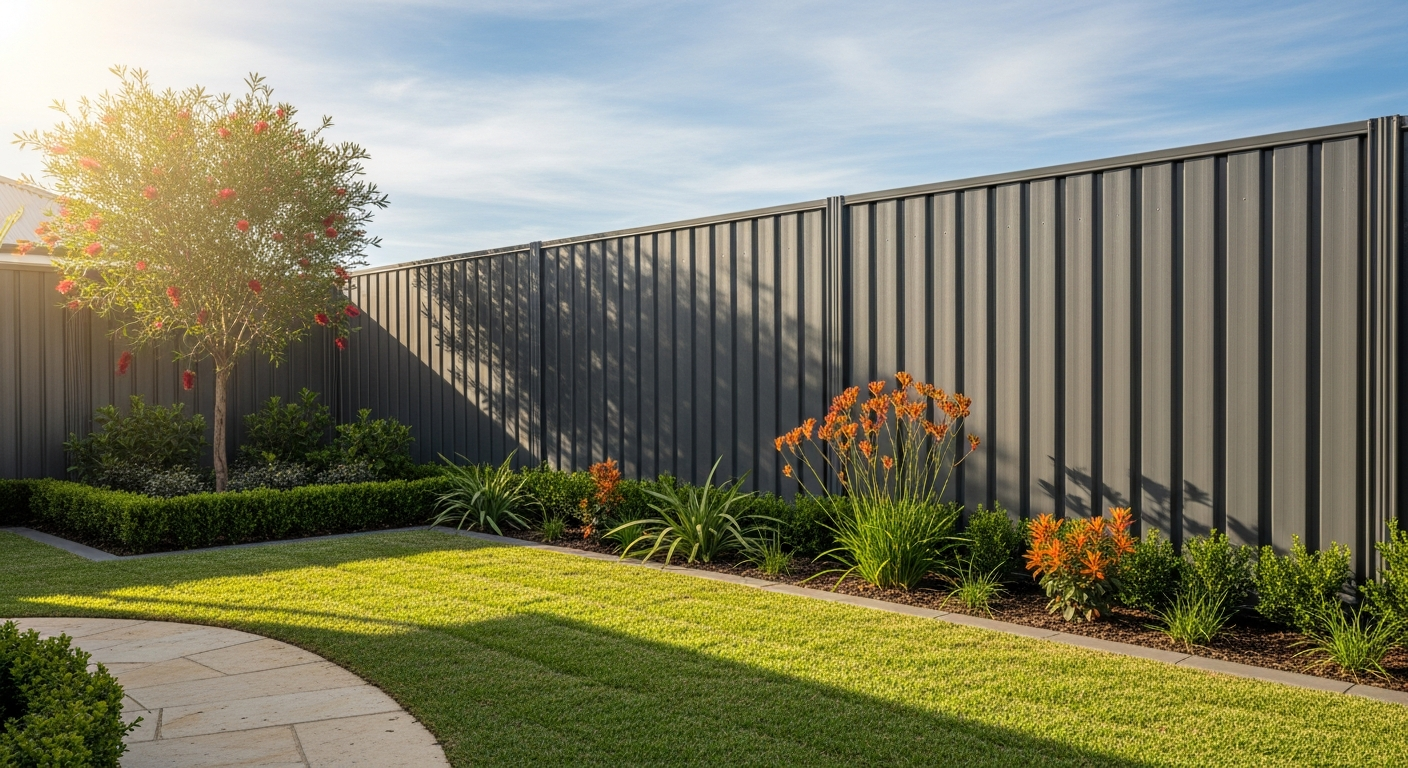
Consistent spacing is easier when the framework is consistent. That is why top installers spend time obtaining the frame right, after that count on spacers for the visual gaps.
Uneven ground forces judgment, not simply measurement
Even when your line is excellent and your messages are properly spaced, the ground seldom sits pleasantly. Inclines, soft spots, and neighborhood dips can alter how fencing boards sit relative to the line.
There are 2 wide methods installers use to handle this:
- Keep the top rail or top line constant and enable bottom gaps to vary.
- Keep the lower constant and allow the top change.
Which technique looks much better depends on the design and the customer's choice. But in any case, the method needs to correspond from one end to the other.
If you are working on a sloping block, you can likewise get a refined spacing shift if the boards are not cut and fitted with care. Boards look uniformly spaced when they are in the exact same aircraft and at the very same height relative to the picked reference. If a board is trimmed slightly differently and reattached with different stress, it can wind up slightly angled.
That is when you need more than "gauge the gap." You need to validate the board face alignment, specifically near corners and where fence panels change to gates.
Gates are the spacing stress test
Gates are where consistent panel spacing actually gets evaluated. A fencing can look great along the straight run, but around a gate opening, the "rhythm" has to reset without appearing like the gaps were changed.
Gate frameworks also create additional restrictions. The hinge side usually requires an accurate clearances for swing, and the latch side needs regular space for dependable operation. If you establish gate opening spacing based simply undecided line, you can end up with panels that do not match visually.
Professional Fencing contractors manage this by deciding the spacing technique early and adhering to it throughout both the gate opening and the adjacent panels. Often that indicates intentionally choosing a "best fit" series of boards around the opening so the voids remain visually consistent, even if the precise measurement series differs slightly.
A great Fence company Melbourne group will certainly also collaborate board matters with eviction structure size. If the fencing uses pre-made panels, eviction opening could call for personalized panel adjustments. That is regular, yet it requires planning.
The order of securing matters greater than many people realize
It is simple to presume that once a board is placed with a spacer, it will stay there. Actually, fasteners can pull boards. When installers screw or nail as well quickly, or when they fasten without examining board face positioning, the board can drift by a little amount.
That tiny drift is typically regular, which makes it tougher to find. By the time you reach the middle of the run, the fencing may still look "close," however the spacing pattern has actually established an error.
Experienced Fence installer crews utilize a series like:
- Position board with spacer.
- Confirm board face alignment relative to the rails.
- Fasten gently at key points first.
- Recheck spacing and straightness.
- Then completely fasten.
The concept is not to baby the job, it is to stay clear of securing a mistake.
If you desire a useful way to spot this, look at the pattern of board faces on a completed fence. If they all seem equally lined up, the installer most likely reconsidered. If the leading sides look right but the board faces feel discreetly skewed, it often implies boards were secured with less rechecking.
Adjustments take place, yet they are controlled
Every fence work has minutes where something does not add up perfectly. Possibly a message opening came a little off-centre. Maybe a rail brace needed small repositioning. Possibly a board had a spin that needed to be pushed flat before fastening.
The objective is not to prevent adjustments. The objective is to stop adjustments from altering spacing unpredictably.
Professionals treat modifications like a spending plan. If you require to remedy two millimetres on one section, you prepare just how it affects the following few boards so the spacing remains aesthetically consistent. Typically, installers will certainly concentrate the improvement in one area, as opposed to spreading tiny changes across the entire run.
This is why a good Fence contractor may take an extra couple of minutes at a certain bay. They are not delaying, they are avoiding drift later.
Measuring for proportion at human eye level
One of the most effective "quality control" methods is checking spacing from the viewpoint of individuals who live with the fence. Lines can look directly at ground level and a little various when viewed at eye level.
Fence installers that build uniformity will commonly walk along the fencing line, not just at the start yet at several factors. They examine:
- Whether the gaps show up even from a distance.
- Whether any bow or spin is visible via a run of panels.
- Whether spacing near edges and changes matches the straight sections.
This is particularly important on modern-day slat styles where the spaces develop an aesthetic texture. A fence that is technically precise by dimension can still look irregular if it "takes a breath" due to mount spin or board angle.
Material realities: wood, metal, and compound behave differently
Not all fencing systems behave the same. Regular panel spacing needs adjusting your method to the material.
Timber fencings can relocate with dampness and temperature. Boards can cup slightly or differ in straightness. Even if the installer does everything right, boards in some cases need little stress modifications prior to fastening.
Metal systems, including many Colorbond-style panel options, frequently utilize braces and dealt with rail parts. Spacing uniformity can be a lot more repeatable due to the fact that the system equipment controls the positioning. Nonetheless, if the rail braces are not installed regularly on each post, the boards can still look uneven.
Composite products often have their own resistance arrays, and some systems include dedicated spacers for a factor. A specialist installer areas those resistances and does not "make it fit" by forcing one board to another.
This is also where the difference between Fence company and Fence contractors shows up. Not every attire mounts specifically similarly, also if the end item looks comparable. The most effective crews recognize just how their chosen item responds and what modifications preserve spacing without harming the structure.
Common spacing pitfalls that spoil the look
There are a few issues I see repetitively, and they all share a style: inconsistency in referral points or bolt behavior.
Here are the regular causes of spacing that drifts:
- Losing the line recommendation, normally since the string line is not limited enough or changes throughout layout.
- Treating article holes as "close sufficient," after that making up later in such a way that adjustments spacing rhythm.
- Using spacers improperly, specifically if they are placed inconsistently or removed also early.
- Letting rails twist or sit unevenly, which makes the board faces modification angle.
- Fastening without reconsidering alignment, so boards "pull" as screws go in.
Notice that none of these have to do with an absence of initiative. They have to do with best fencing company procedure control.
If you want to avoid difficulty when taking care of a Fence contractor Melbourne customer like me, the easiest thing is to ask exactly how they regulate the recommendation line and whether they use spacers or jigs made for the item. A specialist will usually clarify it plainly and without embarrassment.
A fast spacing peace of mind checklist installers count on
I am not mosting likely to make believe installers do every little thing completely regularly, however there are a couple of quick checks that are almost global amongst the far better teams. When you see these in action, you can be positive the spacing work is being taken care of, not guessed.
- Confirm the fence line recommendation is limited and straight at the start and once again midway.
- Check message centres match the system needs before rails go on.
- Use the proper spacer or jig for the item and area it similarly every board.
- Keep rails straight and true, rechecking for spin as you progress.
- Recheck spaces at eye level before passing a section.
Those five checks sound basic, however they resolve most spacing troubles prior to they show up on the ended up fence.
Trade-offs: rate versus consistency
In the field, there is constantly stress. A client wants the job done fast, weather condition modifications, and sites can run behind timetable. That is where you occasionally see edges cut.
But regular panel spacing is hard to hurry without giving up control. If an installer attempts to "make it through the bays" quickly, they may miss reconsidering rails, attach also boldy, or move the recommendation line without validating it remained true.
That claimed, experienced staffs can still work quickly due to the fact that they have an operations. They set up devices efficiently, pre-stage products, and keep their measuring actions organized.
So the actual trade-off is not speed versus high quality. It is rushed process versus self-displined process. Good Fence installers take care of the regimented procedure with momentum.
Why focus to spacing builds depend on with fencing clients
A fencing is not just a boundary, it is everyday views. Individuals feel the distinction in between a fencing that looks intentional and one that looks "covered together."
When spacing is consistent, it indicates more than appearances. It suggests the messages were planned, the rails were established thoroughly, and the installer adhered to a repeatable method. That develops count on, and it commonly lowers callbacks.
I have also seen that customers commonly end up being much more unwinded about other information once they see constant panel spacing. If the gaps are right, they often tend to consider the fencing extra kindly in general, even if a certain cut is not excellent in a close inspection.
That does not indicate you disregard workmanship. It implies your procedure is doing more than satisfying a measurement, it is producing confidence.
How to detect a constant spacing approach on site
If you are enjoying a task underway, you do not need to be a designer to recognize great techniques. Check out how they established and exactly how they move from one bay to the next.
You will likely see:
- A constant reference line, usually string or laser aligned.
- Spacers or a jig being used at virtually every board position.
- Rails being looked for straightness prior to boards are fully attached.
- Occasional stops briefly to reconsider placement around edges, gates, or incline changes.
The installers are not simply "structure," they are verifying. That confirmation action is what maintains spacing regular across the entire run.
And if a spacing problem does appear, the most effective teams fix it in your area rather than letting the drift accumulate throughout multiple panels.
Final ideas from the tools-on-the-ground perspective
Consistent panel spacing is just one of those ending up qualities that divides a good arise from a terrific one. It is not magic, it is control: line referral, post placement, rail straightness, spacer technique, and a fastening series that prevents boards from shifting.
When Fence contractors obtain those aspects right, the fence looks calmness. It appears like it belongs there.
If you are employing a Fence company or comparing Fence installer alternatives, emphasis much less on marketing language and more on process. Ask just how they maintain the line directly, whether they utilize product-specific spacers or jigs, and how they take care of unequal ground and entrance changes. The responses you get will tell you whether the group understands spacing as a repeatable system or just a hoped-for outcome.
Because in the end, constant voids are not a tiny detail. They are the fencing's aesthetic structure, the rhythm that makes whatever else appearance intentional.
❧